
Coming soon
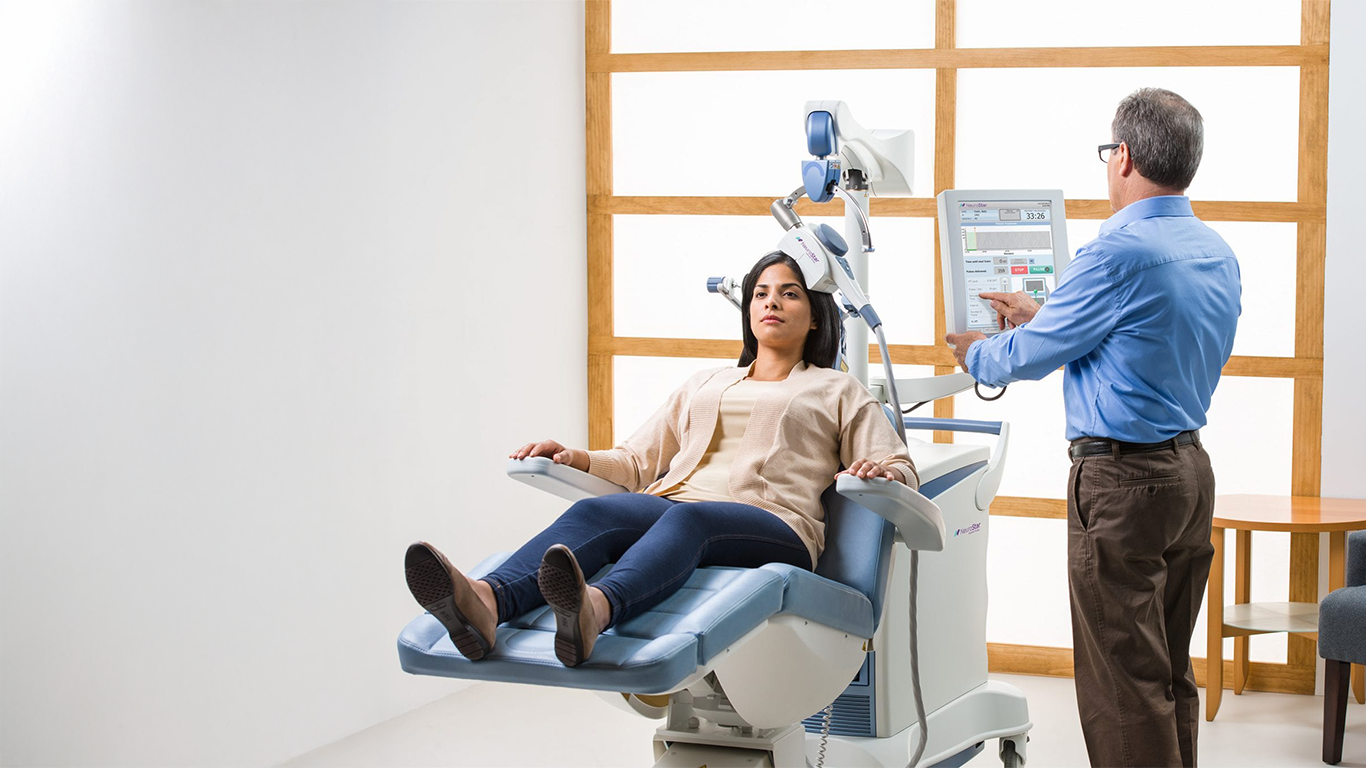
What Is TMS Therapy?
Transcranial Magnetic Stimulation (TMS) is an advanced, non-invasive treatment that uses gentle magnetic pulses to stimulate specific areas of the brain involved in mood regulation. It’s designed for people who haven’t found enough relief from depression with medications, therapy, or both.
Why Choose TMS?
- Drug-free and non-invasive
- Minimal to no downtime
- Can work when medications haven’t
- Over 1 million treatments completed nationwide
- Highly targeted technology with proven results

Conditions TMS Can Help
TMS Therapy is best known for its effectiveness in treating Major Depressive Disorder, especially when traditional treatments haven’t provided enough relief. At KAV Mental Health, our clinicians use evidence-based TMS protocols to support patients struggling with a range of mood-related conditions.

Major Depressive Disorder (MDD)
TMS is FDA-cleared for adults with Major Depressive Disorder. By stimulating underactive areas of the brain associated with mood, TMS can help reduce persistent depressive symptoms and improve daily functioning—often without the side effects of medication.

Treatment-Resistant Depression (TRD)
If you’ve tried multiple antidepressants or therapy without meaningful improvement, you may be experiencing Treatment-Resistant Depression. TMS offers a non-invasive, drug-free option for individuals who haven’t found relief through standard treatments. Many TRD patients respond positively to TMS after years of feeling stuck.

Anxiety Symptoms Associated With Depression
While anxiety itself is not currently an FDA-cleared indication, many patients with depression experience significant anxiety as part of their condition. TMS can indirectly help reduce anxiety symptoms by targeting the areas of the brain involved in mood regulation. Improvements in depressive symptoms often lead to decreased anxiety and enhanced emotional stability.

Obsessive-Compulsive Disorder (OCD) (if offered)
Specialized TMS protocols are FDA-cleared for the treatment of OCD. These protocols target different regions of the brain than those used for depression and may help reduce intrusive thoughts and compulsive behaviors.

Why KAV Mental Health?
Selecting the right provider is just as important as choosing the right treatment. At KAV Mental Health, we combine clinical expertise with compassionate care to ensure every patient receives a safe, supportive, and effective TMS experience.
Experienced clinicians trained in advanced neuromodulation
Our team uses the latest evidence-based TMS protocols to deliver safe, effective, and precisely targeted treatment.
Compassionate, patient-first support
We provide attentive, judgment-free care from your first consultation through your final session.
Customized treatment mapping and monitoring
Each patient receives a personalized TMS plan with ongoing assessments to optimize progress.
Private, comfortable TMS environment
Our TMS suite offers a calm, confidential space designed to help you relax throughout treatment.
Coordination with your existing therapist or prescriber
With your permission, we collaborate with your current providers to ensure TMS supports your overall care plan.
What to Expect During Treatment
TMS at KAV Mental Health is designed to be comfortable, predictable, and supportive from start to finish. Here’s what the process looks like:
1. Your First Consultation
You’ll meet with a clinician to review your symptoms, history, and goals to determine whether TMS is a good fit for you.
2. Personalized Treatment Plan
If TMS is recommended, we create a customized plan based on your unique needs, treatment history, and daily schedule.
3. Motor Threshold Mapping
At your first session, we use gentle magnetic pulses to identify the exact stimulation level your brain responds to, ensuring safe and effective treatment.
4. Daily Weekday Sessions (Typically 4–6 Weeks)
Most patients come in Monday through Friday for several weeks, with each session building on the last to support ongoing improvement.
5. Short, Comfortable Sessions (Around 20 Minutes)
You’ll sit in a treatment chair while the TMS device delivers magnetic pulses; you can relax, listen to music, or rest during the session.
6. What TMS Feels Like
Most people describe the sensation as light tapping on the scalp—noticeable but generally well tolerated and not painful.
7. Mild, Temporary Side Effects
Side effects are usually minimal and may include scalp sensitivity or a tapping sensation during treatment, which typically fades early in the course.
8. Tracking Your Progress Over Time
Throughout treatment, we monitor your symptoms, mood changes, and overall progress to make adjustments and help you reach the best possible outcome.
FAQs
Is TMS painful?
Most patients do not consider TMS painful. You may feel a tapping or clicking sensation on your scalp during treatment, which typically becomes more comfortable after the first few sessions.Medicaid
How soon will I feel better?
Many people begin noticing improvements in mood within 2–4 weeks, though every patient responds at their own pace. Progress is monitored closely throughout your treatment.
Can I drive after treatment?
Yes—TMS is non-sedating and non-invasive, so you can drive yourself to and from each session and return to normal daily activities immediately.
Can I stay on medication while doing TMS?
In most cases, yes. TMS is often used alongside existing medications, but your clinician will review all prescriptions to ensure a safe and coordinated plan.
You Don’t Have to Keep Struggling — TMS May Help
Complete the Form Below or Call 937-340-2880 to Request an Appointment Today.